
Local News
Trump Nominates Lance Schroyer as ICE Director Amidst Immigration Policy Debates
President Trump nominates Lance Schroyer as ICE director, highlighting his extensive law enforcement experience amidst ongoing immigration policy debates and public scrutiny.

President Donald Trump has announced his intention to appoint Lance Schroyer, a former Oklahoma state trooper, as the new director of the U.S. Immigration and Customs Enforcement (ICE). Trump emphasized Schroyer’s extensive operational experience and patriotism, describing him as a proven leader with a robust background in law enforcement.
Background and Qualifications
Schroyer’s career spans nearly three decades in law enforcement, including his service as a U.S. Marine. His appointment is backed by Markwayne Mullin, the Secretary of Homeland Security, who highlighted Schroyer’s collaborative work with both state and federal partners in immigration enforcement roles.
ICE’s Role in Immigration Policy
ICE has been at the forefront of Trump’s immigration agenda, which includes the expansion of deportations and detentions. The agency recently benefited from a substantial budget increase, facilitating the hiring of additional officers and the expansion of detention facilities.
Controversy and Public Sentiment
Public opinion on Trump’s immigration policies has been divisive. Mass deportations and aggressive enforcement actions have led to significant public protests and legal challenges. Recent incidents, including the fatal shootings of two citizens in Minneapolis, have intensified scrutiny and criticism of ICE operations.
Legislative Challenges
The nomination comes amid legislative efforts to secure funding for ICE and related enforcement activities. A proposed bill aims to allocate nearly $70 billion to immigration enforcement through 2029. However, the bill faces opposition due to concerns over the lack of reforms and oversight measures.
Implications for ICE Leadership
Schroyer’s potential confirmation would mark a significant leadership change for ICE, which has not had a Senate-confirmed director since the Obama administration. His nomination reflects ongoing political tensions and the complex dynamics surrounding U.S. immigration policy.
Future Directions
If confirmed, Schroyer will be tasked with navigating these challenges while aligning with the administration’s priorities. This includes balancing enforcement with growing calls for accountability and reform.
As the nomination process unfolds, stakeholders from various sectors will be closely watching the implications for both immigration enforcement and broader policy directions.
Local News
Russian Assault on Kyiv Intensifies as NATO Summit Approaches
Kyiv suffers a severe Russian assault as the NATO summit in Turkey approaches, highlighting the escalating conflict and the urgent need for international intervention.
Kyiv, the heart of Ukraine, faced a severe onslaught from Russian forces early Monday, just before a pivotal NATO gathering in Turkey. U.S. President Donald Trump, scheduled to attend the summit, was preparing for discussions amidst heightened tensions. Explosions echoed through the capital, leaving residents trapped in damaged structures as ballistic missiles and drones wreaked havoc.
Impact and Immediate Response
At least three lives were lost, and seven individuals sustained injuries as fires erupted across Kyiv, according to city officials. Rescue teams worked tirelessly to evacuate residents, including children, from the upper levels of a beleaguered building in the Podilskyi area. Kyiv’s Mayor, Vitali Klitschko, communicated via Telegram that efforts to locate those still trapped continued.
Strategic Timing of the Attacks
The assault occurred just a few days after a deadly Russian strike claimed 30 lives in Kyiv, marking the third deadliest attack since the conflict began. Ukrainian President Volodymyr Zelenskyy had forewarned of a massive strike, linking the timing to significant international events, such as America’s Independence Day and the upcoming NATO summit in Ankara.
Escalation of Hostilities
President Trump engaged in a lengthy call with Russian President Vladimir Putin, reiterating his offer to mediate the conflict. However, despite ongoing diplomatic efforts, a resolution remains elusive. Russian forces have intensified their campaign to seize more of Ukraine’s eastern Donetsk region, while Ukraine has increased its own missile and drone offensives against Russian infrastructure.
Challenges in Defense
Ukraine faces significant hurdles in defending its cities as Russia employs advanced technologies like the Geran-4 UAV, which requires sophisticated defense systems. President Zelenskyy continues to urge U.S. and European allies to supply Patriot missiles, essential for countering Russia’s diverse arsenal of ballistic and drone attacks.
The Role of NATO and International Support
The upcoming summit in Turkey will focus on the ongoing war in Ukraine, with President Trump’s presence underscoring the strained relations among NATO allies. The provision of Patriot missile systems is critical for Ukraine’s defense, as these interceptors can neutralize a range of aerial threats, providing a crucial bulwark against further aggression.
Looking Forward
The situation in Ukraine remains precarious, with international diplomacy and military support playing vital roles in the ongoing conflict. As the NATO summit unfolds, the global community watches closely, hoping for steps towards de-escalation and peace.
Local News
UEFA Criticizes FIFA’s Decision to Allow US Player Despite Red Card
UEFA has strongly criticized FIFA’s decision to allow US forward Folarin Balogun to play in the World Cup despite a red card, raising concerns about rule enforcement and the integrity of the competition.
The decision by FIFA to permit United States forward Folarin Balogun to participate in the World Cup match against Belgium has sparked significant controversy. UEFA has openly criticized this move, labeling it as ‘incomprehensible and unjustifiable’. The controversy arises from Balogun receiving a red card in his preceding match, which traditionally results in a one-game suspension.
FIFA’s Unprecedented Ruling
FIFA’s decision to place Balogun’s suspension on a one-year probation, instead of enforcing it immediately, has been met with global criticism. This decision came after alleged pressure from U.S. President Donald Trump, causing a deviation from established soccer regulations. Such a precedent, according to UEFA, undermines the integrity of the sport.
Reactions from the Soccer Community
Many within the soccer community, including former World Cup players and coaches, have expressed their disapproval. Norway’s coach, Ståle Solbakken, stated that this decision could negatively impact the World Cup’s reputation. UEFA, which includes Belgium among its member federations, has emphasized that this situation is not open to interpretation and firmly believes in the enforcement of established rules.
Implications for Soccer’s Governance
UEFA’s relationship with FIFA has been tense, especially under the leadership of FIFA President Gianni Infantino. This incident highlights ongoing governance challenges and raises questions about the consistency and fairness of decision-making processes in soccer’s highest bodies.
Belgium’s Response and Next Steps
The Belgian soccer federation has decided to appeal the decision, preparing to challenge it in Seattle before a FIFA-appointed judge. As the match against the U.S. approaches, set to kick off at 5 p.m. local time, the outcome of this appeal could significantly influence the tournament’s proceedings.
In conclusion, the controversy surrounding Balogun’s participation underscores the importance of adherence to established rules in maintaining the credibility of international competitions. Soccer’s governing bodies face increasing scrutiny, and their decisions will be pivotal in shaping the sport’s future integrity.
Local News
Trump’s Strategic Dialogues at NATO Summit: Focus on Ukraine and Syria
President Trump is set to engage in critical discussions with Ukraine’s Zelenskyy and Syria’s al-Sharaa at the NATO summit, focusing on conflict resolution and regional stability.
President Donald Trump is poised for pivotal discussions with Ukrainian President Volodymyr Zelenskyy and Syrian President Ahmad al-Sharaa during the upcoming NATO summit in Turkey. These meetings are particularly significant as Ukraine seeks to highlight the ongoing conflict with Russia, and discussions around Syria’s geopolitical role intensify.
The Context of Trump’s Engagements
As the NATO summit unfolds, Trump’s itinerary includes a crucial meeting with Turkey’s President Recep Tayyip Erdogan on Tuesday, followed by interactions with Zelenskyy and al-Sharaa on Wednesday. Each of these talks is expected to address pressing international issues, with a strong focus on security and diplomatic relations.
Ukraine’s Strategic Appeal
Zelenskyy’s meeting with Trump comes at a critical juncture, as the war between Russia and Ukraine extends into its fifth year. With recent escalations in Ukraine’s military efforts against Russia, Zelenskyy aims to leverage Trump’s influence to galvanize international support for a resolution.
In a recent communication, both Zelenskyy and Russian President Vladimir Putin reached out to Trump, marking the U.S. Independence Day celebrations. These conversations underscored the possibility of peace, with Trump reiterating his commitment to facilitating an end to hostilities.
The Syrian Conundrum
Meanwhile, Trump’s dialogue with al-Sharaa is set against a backdrop of complex Middle Eastern dynamics. Trump’s frustration with the ongoing conflict involving Israel and Hezbollah has led to controversial suggestions that Syria take a more active role against Hezbollah. However, al-Sharaa, having assumed power after ousting Bashar Assad, has expressed reluctance, viewing Trump’s proposals as misinterpretations.
Implications for Global Diplomacy
The outcomes of these meetings could significantly influence global diplomatic strategies. The U.S. administration’s focus on resolving the Ukraine conflict and navigating Syrian geopolitics reflects broader strategic interests in stabilizing volatile regions and reinforcing alliances.
Future Prospects and Challenges
Trump’s subsequent discussions with Putin, following his engagements at the NATO summit, could further shape the trajectory of international relations. The U.S. remains committed to exploring peaceful solutions, though the complexity of these issues presents considerable challenges.
In summary, the NATO summit serves as a crucial platform for President Trump to address some of the most pressing geopolitical challenges of our time. His ability to negotiate and influence outcomes in Ukraine and Syria could have lasting implications for global peace and stability.
As these high-stakes discussions unfold, the international community watches closely, anticipating potential breakthroughs or setbacks in these critical regions.

-
Local News2 months ago
Debunking Misleading Claims: The San Diego Mosque Shooting Incident
-

 Local News2 months ago
Shein’s Unlikely Acquisition of Eco-Conscious Everlane: Impact and Implications
-

 Local News2 months ago
Upcoming Severe Storms Expected to Impact Oklahoma Tonight
-
Local News2 months ago
Wendy’s Witty Take on Wembanyama’s Stellar Performance in OKC
-

 Local News2 months ago
Dressing for a Cloudy and Cool Day: Your Complete Guide
-

 Local News2 months ago
Heroic Rescue Efforts Save Lives in Fiery Car Crash
-

 Local News2 months ago
Mastering Cold Outreach: Strategies for Success
-
 Local News2 months ago
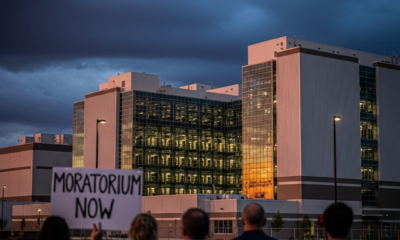
Oklahoma City Council Deliberates on Data Center Moratorium Exceptions