
Local News
Capitol Police Officers Challenge $1.776 Billion Fund in Court
Two Capitol officers have filed a lawsuit to prevent the distribution of a $1.776 billion fund aimed at compensating alleged victims of politically motivated prosecutions. The fund could include January 6 rioters, prompting legal and ethical debates.


In a bold legal move, two police officers who were on the front lines during the Capitol siege have initiated a lawsuit to prevent the distribution of funds from a substantial $1.776 billion settlement. This fund is intended for individuals who assert they were subjected to politically driven legal actions. The lawsuit comes on the heels of a congressional hearing where Acting Attorney General Todd Blanche defended the fund’s establishment.
Background of the Fund
This fund, created by the Justice Department, aims to compensate those who argue they faced unjust investigations or prosecutions due to political biases. It emerged as part of a broader agreement where President Trump withdrew multiple legal grievances against various government entities, including the IRS and DOJ.
Potential Recipients and Controversies
The creation of this fund has sparked controversy, particularly because it could potentially benefit individuals involved in the January 6 riots. The fund is overseen by a five-member commission, with the President having significant influence over the final decisions regarding payouts.
The Lawsuit’s Details
The officers, Daniel Hodges and Harry Dunn, have taken legal action to prevent any rioters from receiving compensation. Both officers provided compelling testimony about their experiences during the attack, emphasizing the severe impact on law enforcement personnel, over 100 of whom were injured.
Legal Implications and Public Response
This lawsuit underscores significant legal and ethical questions about the allocation of government funds and the accountability of those involved in the Capitol attack. The legal proceedings will likely address whether the fund’s distribution aligns with its intended purpose of rectifying political misuse of judicial power.
Conclusion
As the legal battle unfolds, the implications for justice and political accountability remain significant. This case not only challenges the distribution of a large settlement fund but also raises broader questions about the intersection of politics and law enforcement.
Local News
Caregiver Confesses to Murder of Young Child, Receives Life Sentence
A caregiver has confessed to the murder of four-year-old Athena Brownfield, receiving a life sentence. The case highlights critical issues in child welfare and the responsibilities of caregivers.
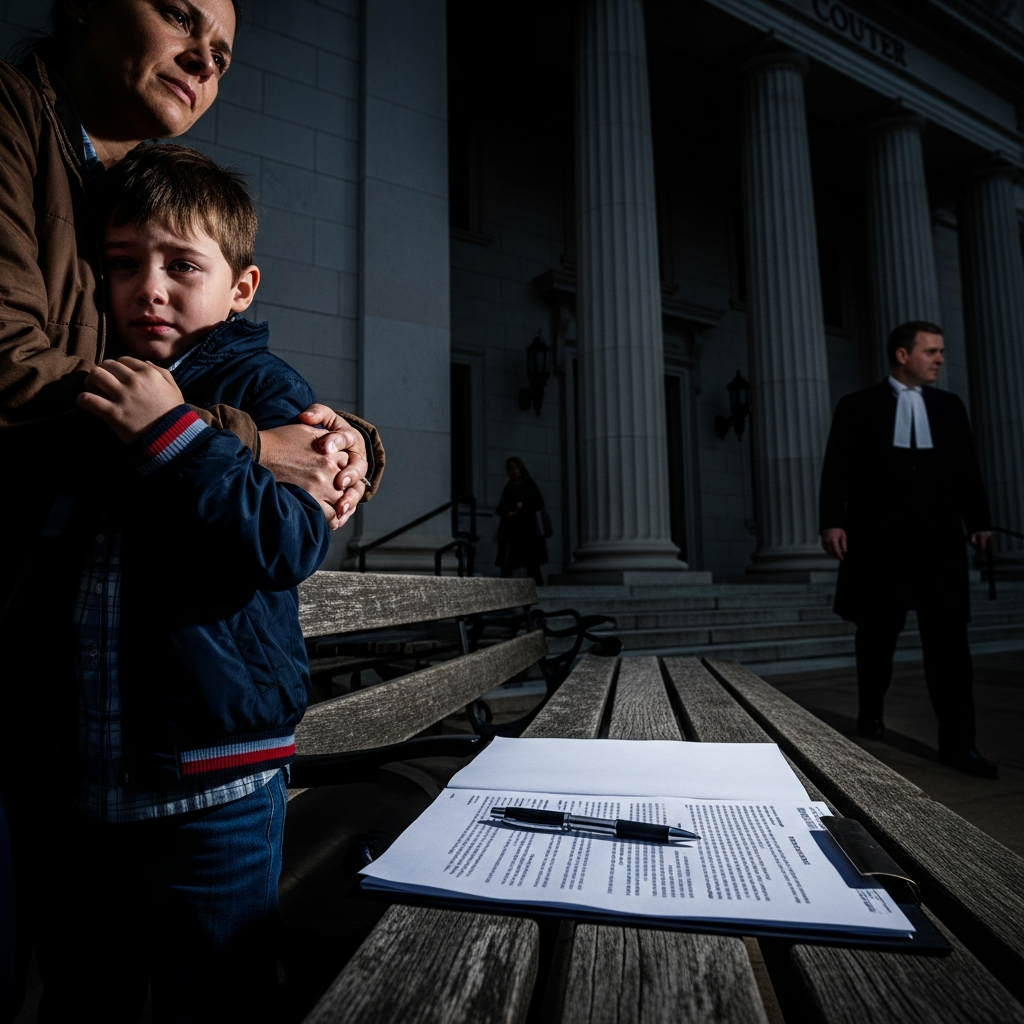
A significant legal development unfolded as a caregiver admitted to her role in the tragic death of a four-year-old girl, Athena Brownfield. This confession was made in a Caddo County courtroom where Alysia Adams, one of two accused caregivers, confessed to second-degree murder, child neglect, and obstructing an officer. As a consequence, the judge sentenced her to life imprisonment, with a requirement to serve at least 85 percent of her sentence before eligibility for parole.
Emotional Court Proceedings
The court atmosphere was heavy with emotion as Adams entered, visibly distressed. During the proceedings, victim impact statements were presented, painting a somber picture of the loss and grief experienced by Brownfield’s family. In a tearful address to the court, Adams expressed remorse, stating her regret over her actions, and reflecting on the challenging years since the incident. She mentioned finding solace in spirituality, admitting, ‘I also loved her, and I’m so sorry for the hurt we caused.’
Timeline of Athena Brownfield’s Tragic Case
The case first came to light on January 10, 2023, when Brownfield’s sister was discovered unattended in Cyril, Oklahoma. This discovery spurred an extensive search by law enforcement and OSBI agents. Tragically, Brownfield’s remains were later located in rural Grady County. Court documents revealed the child had been killed on Christmas Day 2022, adding a grim layer to the already heartbreaking narrative.
Legal Proceedings and Charges
Both Alysia and her husband, Ivon Adams, faced charges related to Brownfield’s death. Despite being offered plea deals previously, Alysia had consistently declined. In 2024, the District Attorney had even suggested the pursuit of the death penalty. Her recent guilty plea marks a pivotal moment in the legal process, bringing some closure to the case.
Abuse Allegations and Legal Implications
The court documents also detailed disturbing allegations of abuse, including claims that hot sauce was used as a form of punishment. These revelations have intensified public outrage and highlighted the severe neglect Brownfield endured. The legal outcome now sets a precedent for cases involving child neglect and abuse.
The Impact of the Case
The case has had a profound impact on the community, sparking discussions about child welfare and the responsibilities of caregivers. It underscores the critical importance of vigilance in protecting vulnerable children from harm. This tragic incident serves as a reminder of the necessity for systemic improvements in monitoring child welfare cases.
Conclusion
As the legal proceedings conclude, the focus shifts toward healing for the family and broader societal reflections on preventing similar tragedies. The case of Athena Brownfield continues to resonate, highlighting the need for change in child protection practices. What measures do you think should be implemented to prevent such incidents in the future?
Local News
Unveiling the Mystery of a Cast Iron Casket at Mississippi Asylum
Archaeologists have uncovered a rare 200-pound cast iron casket at Mississippi’s asylum cemetery, posing challenges in identifying the remains but offering insights into 19th-century burial practices.
An extraordinary find has emerged from the grounds of the Mississippi State Hospital, where archaeologists have unearthed a 200-pound cast iron casket dating back to the 1800s. Despite the ravages of time, the casket contains the remains of a woman, posing a significant challenge in identifying her.
The Discovery at Mississippi Asylum
Archaeologists working at the site of the old Mississippi State Hospital recently made a remarkable discovery. Amongst thousands of graves, they found a rare cast iron casket containing the remains of a woman. This site, originally the Mississippi State Lunatic Asylum, operated from 1855 to 1935 and is now part of the University of Mississippi Medical Center’s ongoing excavation project.
Challenges in Identification
Dr. Jennifer Mack, the lead bioarchaeologist, highlights the difficulties in identifying the remains due to a crack in the casket that allowed water to seep in, leading to decomposition. Despite these challenges, the team is hopeful that DNA analysis might provide clues about the woman’s identity.
Historical Context of Asylum Burials
During its operation, the asylum buried unclaimed patients in simple pine coffins. However, the cast iron casket indicates a possible intention by the woman’s family to reclaim her body, as these caskets were marketed as body preservers and were quite costly.
Significance of the Find
This discovery not only opens a new chapter in understanding the history of the asylum but also raises awareness about the conditions and practices of mental health institutions in the 19th century. The excavation continues, with over 3,000 graves yet to be explored.
Next Steps in the Excavation Project
As excavation efforts proceed, the team aims to uncover more about the lives of those buried at the site. This project provides valuable insights into historical burial practices and the social attitudes towards mental health during that era.
Researchers and historians are eager to learn what other secrets the cemetery holds, as each discovery adds a piece to the puzzle of the past.
Local News
US Charges Against Raúl Castro Intensify US-Cuba Tensions
The US has charged former Cuban President Raúl Castro with serious crimes, escalating tensions between the two nations and potentially reshaping future diplomatic relations.
The United States has intensified its diplomatic pressure on Cuba by indicting former President Raúl Castro, marking a significant escalation in the strained relations between the two nations. On Wednesday, charges were unveiled against the 94-year-old Castro, who is accused of conspiring to kill American nationals and orchestrating the destruction of an aircraft. This legal action marks the first instance in nearly seven decades where a senior figure from the Cuban government has faced such charges in the US.
Background of the Indictment
The charges relate to the infamous 1996 incident where Cuban fighter jets downed two civilian aircraft operated by the exile group Brothers to the Rescue. This event resulted in the death of four individuals and has remained a point of contention between the US and Cuba. The Justice Department’s indictment also includes several Cuban airmen believed to be involved in the incident.
Implications for US-Cuba Relations
The indictment occurs amid heightened rhetoric from the Trump administration, which has been vocal about regime change in Cuba following the capture of former Venezuelan President Nicolás Maduro. Trump’s administration previously targeted Maduro with drug-trafficking charges, resulting in his removal via a military operation and subsequent trial in New York. These actions have further strained US-Cuban relations, leading to severe sanctions that have impacted Cuba’s economy.
Cuban Leadership and Response
Despite stepping down from official leadership roles, Raúl Castro is believed to wield significant influence within Cuba’s political landscape. The US’s legal maneuvers aim to leverage this indictment as a strategic tool to negotiate concessions, such as the release of political prisoners or limiting Russian influence in the region.
Historical Context of US-Cuba Tensions
The roots of this conflict trace back to the 1990s when Brothers to the Rescue conducted overflights in Cuban airspace, prompting protests from the Cuban government. The incident in 1996 escalated the situation, leading to a hardened US stance against Cuba, despite the end of the Cold War and diminishing revolutionary activities by the Castro regime.
Future Prospects
As tensions mount, the US’s strategic moves highlight the complex geopolitical landscape in the Caribbean. The outcome of these charges could potentially reshape diplomatic relations, contingent on Cuba’s response and any shifts in internal leadership dynamics.
-

 Local News6 hours ago
Dressing for a Cloudy and Cool Day: Your Complete Guide
-

 Local News5 hours ago
Fashion Magnate’s Demise Leads to Son’s Arrest Amid Investigation
-

 Local News5 hours ago
Mastering Cold Outreach: Strategies for Success
-

 Local News6 hours ago
Oklahoma City Council Deliberates on Data Center Moratorium Exceptions
-

 Local News4 hours ago
Reflecting on the 2013 Moore EF-5 Tornado: A Tragic Reminder
-
 Local News5 hours ago
Fishermen Discover Body in Oklahoma’s North Canadian River
-

 Local News5 hours ago
Oklahoma City Standoff Ends with Fatal Police Shooting
-

 Local News4 hours ago
Tesla Cybertruck Rescue from Lake After ‘Wade Mode’ Mishap