
Local News
Key Legislative Developments in Washington: Immigration Funding and Policy Debates
This week, the House debates a $70 billion immigration funding bill essential for Trump’s policies, while the Supreme Court readies decisions on key cases.

This week in Washington, the House of Representatives is poised for significant action as it deliberates on a substantial $70 billion budget aimed at bolstering immigration enforcement. The bill, already passed by the Senate, is critical for the continued implementation of President Donald Trump’s immigration policies. If approved, it will allocate $30 billion to Immigration and Customs Enforcement (ICE) and additional funds to Customs and Border Protection, securing financial resources for the Department of Homeland Security through 2029. Notably, the bill lacks specific guidelines on expenditure, raising concerns among some lawmakers.
Details of the Immigration Funding Bill
The proposed legislation, which has sparked considerable debate, aims to fortify immigration enforcement by providing significant financial backing. The allocation includes $30 billion specifically earmarked for ICE operations. However, the absence of detailed spending directives has prompted calls for greater oversight from some political factions. The overarching goal is to sustain the administration’s immigration agenda, focusing on expedited deportation processes and enhanced border security measures.
Controversies and Amendments
The bill has faced scrutiny for not including language that would prevent the establishment of a $1.8 billion anti-weaponization fund. This fund is intended to compensate individuals the administration deems were unfairly targeted by federal actions. While some GOP moderates advocate for restrictions on this provision, the current bill leaves the option legally viable. Acting Attorney General Todd Blanche has indicated that there are no immediate plans to activate the fund, yet without explicit prohibitions, the possibility remains open.
Other Legislative and Judicial Actions
In addition to the immigration funding debates, the House has recently passed an appropriations bill impacting nutritional benefits for vulnerable groups. The bill proposes cuts to funding for children, pregnant, and postpartum women, which has sparked criticism from advocacy groups. Republicans assert that the remaining funds are adequate, but there are concerns about reduced access to fresh produce amid rising grocery prices linked to geopolitical tensions.
Supreme Court and Executive Actions
Simultaneously, the Supreme Court is anticipated to deliver rulings on critical cases concerning birthright citizenship, executive authority, and voting rights. Decisions on the legality of state bans on transgender athletes in women’s sports and the counting of mail-in ballots post-Election Day are highly awaited. President Trump is also scheduled to meet with AI industry leaders to discuss future investments, amidst ongoing negotiations with Iran over regional conflicts.
Conclusion: Implications and Next Steps
This legislative session in Washington carries significant implications for national policy, particularly in immigration and social welfare sectors. As decisions unfold, they will shape the political landscape and influence the administration’s strategies moving forward. Stakeholders and citizens alike are encouraged to engage with these developments actively, ensuring that diverse perspectives inform future policy directions.
Local News
Pakistan and Iran Near Historic Agreement to Conclude War
Pakistan announces a potential peace agreement with Iran, signaling hope for an end to hostilities and the reopening of the Strait of Hormuz. Key elements include nuclear program provisions and phased sanction relief.
The prospect of an agreement to conclude the longstanding conflict with Iran is gaining momentum, as Pakistan has stepped forward to announce that a resolution is on the horizon. This announcement comes amidst burgeoning optimism from Tehran. The resolution aims to bring an end to hostilities and ensure the reopening of the crucial Strait of Hormuz, a vital artery for global energy supplies.
Key Developments in the Peace Deal
Pakistan’s Prime Minister, Shehbaz Sharif, declared that the agreement is nearly finalized, with an electronic signing anticipated within 24 hours. This would be followed by detailed technical discussions in the coming week. The deal notably includes stipulations concerning Iran’s nuclear ambitions, a topic that has been a focal point of international tension.
Implications for the Strait of Hormuz
One of the significant components of the agreement is the commitment to reopen the Strait of Hormuz. This passage is critical for the transit of oil and natural gas from the Persian Gulf, and its reopening could stabilize international energy markets.
Regional and Global Reactions
The United States and its allies have expressed cautious optimism about the potential deal, recognizing the phased lifting of sanctions and the release of Iranian assets as crucial steps towards peace. However, details remain unresolved, and past efforts to broker a lasting peace have faltered.
Funeral Plans for Ayatollah Khamenei
In related news, Iran is preparing for the funeral of former Supreme Leader Ayatollah Ali Khamenei, who was a pivotal figure in the conflict’s early stages. The ceremonies are scheduled to occur in early July, during a period of significant religious observance.
Moving Forward
While the agreement marks a hopeful chapter in regional diplomacy, the coming days will be critical as involved parties work through unresolved issues. The international community watches closely, hoping the deal leads to sustained peace and stability in the Middle East.
Local News
Trump’s Strategic Move at G7: Potential Peace with Iran on the Horizon
President Trump heads to the G7 summit with a potential peace agreement with Iran, aiming to end ongoing hostilities. This move could significantly impact global energy markets and reshape diplomatic relations.
As President Donald Trump prepares to meet global leaders at the G7 summit, he brings with him the announcement of a potential agreement that could end the long-standing conflict with Iran. The proposed framework, which Trump mentioned on social media, aims to initiate a dialogue between the U.S. and Iran, potentially concluding their ongoing hostilities. However, Iran’s military has yet to confirm the signing, and details remain sparse.
Strategic Timing and Global Reactions
President Trump’s announcement comes at a critical time, aligning with his arrival at the G7 summit in Evian-les-Bains. This move could potentially shift the dynamics of the summit discussions, especially with leaders who have been vocal critics of the conflict. The war, lasting over 15 weeks, has significantly impacted global energy prices, a point of contention among voters and politicians alike.
Economic Implications and Geopolitical Shifts
The conflict has led to a noticeable surge in gas prices due to disruptions in the Strait of Hormuz, a vital passage for global oil. Trump’s plan to lift the blockade, contingent upon the agreement’s signing, aims to restore the flow of oil, crucial for stabilizing energy markets. Iranian officials, however, insist the strait will remain closed until the deal is finalized.
Key Issues and Diplomatic Challenges
The proposed memorandum of understanding is expected to initiate a 60-day period of technical negotiations, focusing on Iran’s nuclear ambitions and sanctions. This two-phase approach highlights the complexity of the issues at hand, with Iran’s nuclear program being a persistent sticking point for the U.S.
International Mediation and the Role of Allies
Pakistan has played a mediating role in the negotiations, highlighting the involvement of international players in facilitating dialogue. As discussions progress, the agreement could alter geopolitical alliances, with European leaders and NATO members scrutinizing the U.S.’s unilateral decisions.
Implications for U.S. Foreign Policy
Trump’s approach to Iran, distinct from his predecessor’s, raises questions about the long-term efficacy and reliability of U.S. foreign policy. While the agreement promises economic incentives for Iran, critics question its sufficiency and the mechanisms for enforcement and compliance.
Global Economic and Political Considerations
The G7 summit will also address broader economic concerns, including potential tariffs on European goods if diplomatic tensions with France over digital taxes persist. Trump’s prior critiques of the 2015 nuclear deal underscore the challenges of reaching a sustainable peace agreement with Iran.
Conclusion and Future Prospects
The upcoming discussions at the G7 summit will be pivotal in shaping the future of U.S.-Iran relations. As President Trump seeks to navigate these complex issues, the global community watches closely. The potential end to the conflict could mark a significant diplomatic achievement, but the path remains fraught with challenges and uncertainties.
Local News
Comprehensive Overview of the Recent U.S.-Iran Peace Agreement
The U.S. and Iran have reached a historic agreement to de-escalate tensions, highlighted by the reopening of the Strait of Hormuz and the end of military operations. This development promises economic benefits globally and marks a significant diplomatic achievement.
A significant development in international relations has emerged as the United States and Iran have reached a pivotal agreement aimed at ending ongoing hostilities. President Donald Trump announced via social media that the agreement is now finalized, marking a potential turning point in regional stability and global economic impacts.
Details of the Agreement
The agreement primarily focuses on the reopening of the Strait of Hormuz without tolls, reverting the strategic waterway to its pre-conflict state. This change is expected to facilitate the free flow of oil, potentially stabilizing global oil prices. As part of the deal, the U.S. has lifted its naval blockade in the region, which could further contribute to easing tensions and boosting international trade.
Mediation and Terms
Pakistani mediators played a crucial role in facilitating the dialogue between the two nations. An immediate and permanent cessation of military activities has been declared on all sides, an essential step toward lasting peace. The agreement also provides a 60-day window for both countries to negotiate the future of Iran’s enriched uranium and nuclear ambitions, with an option to extend this period if necessary.
Implementation and Future Steps
The agreement’s success hinges on its formal signing, scheduled to take place in Switzerland by the upcoming Friday. This signing will solidify the commitments made and set the stage for further diplomatic efforts to address remaining issues. Both countries are expected to engage in continuous dialogue to ensure compliance and foster mutual trust.
Implications for Global Markets
The reopening of the Strait of Hormuz is anticipated to have a positive effect on global oil supply chains, potentially reducing fuel prices worldwide. This could be particularly beneficial for economies heavily reliant on oil imports, providing a cushion against inflationary pressures and encouraging economic growth.
Conclusion
This agreement between the U.S. and Iran symbolizes a significant step towards regional peace and stability. While challenges remain, the outlined framework offers a structured path forward. The global community will be closely watching the implementation of this agreement, hopeful for a new era of cooperation and prosperity.

-
Local News4 weeks ago
Debunking Misleading Claims: The San Diego Mosque Shooting Incident
-

 Local News3 weeks ago
Shein’s Unlikely Acquisition of Eco-Conscious Everlane: Impact and Implications
-

 Local News3 weeks ago
Upcoming Severe Storms Expected to Impact Oklahoma Tonight
-

 Local News4 weeks ago
Dressing for a Cloudy and Cool Day: Your Complete Guide
-

 Local News4 weeks ago
Heroic Rescue Efforts Save Lives in Fiery Car Crash
-
Local News4 weeks ago
Wendy’s Witty Take on Wembanyama’s Stellar Performance in OKC
-

 Local News4 weeks ago
Mastering Cold Outreach: Strategies for Success
-
 Local News4 weeks ago
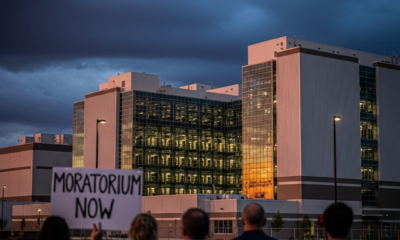
Oklahoma City Council Deliberates on Data Center Moratorium Exceptions